


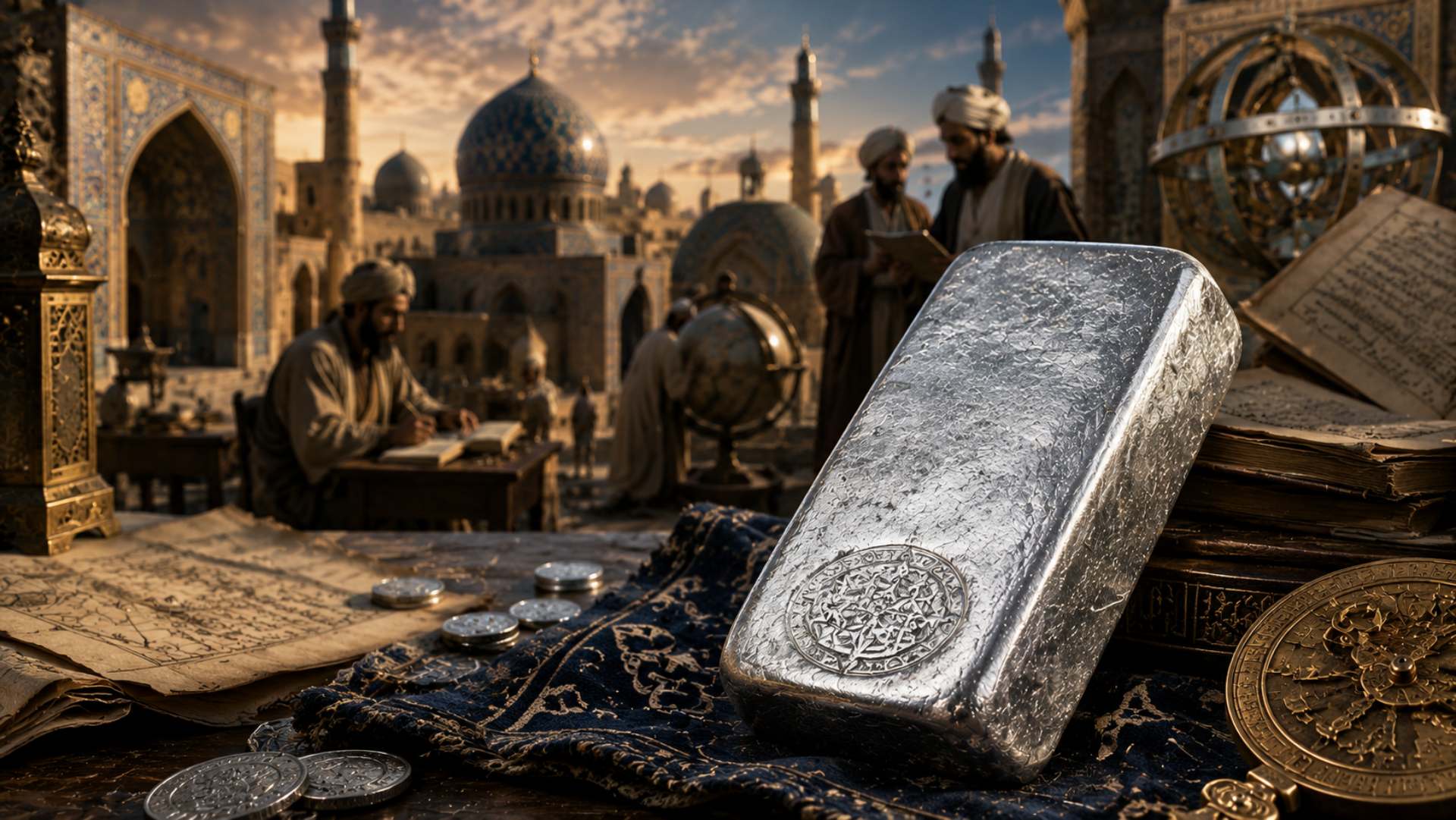
In the mountains of what is now Tajikistan in a valley the medieval Arab geographers called Panjhir, meaning “five lions” there were silver mines that changed the world.
This is not a figure of speech.
The Panjhir silver mines, at peak production in the 9th and 10th centuries CE, produced silver on a scale that effectively funded the Abbasid Caliphate’s golden age. They provided the raw material for a monetary system of extraordinary sophistication one that connected the Islamic world from Morocco to Malaysia, from Central Asia to sub-Saharan Africa and put enough metal into circulation that a young merchant in Baghdad could borrow capital, trade across three continents, and settle his debts in a coin whose value was guaranteed by chemistry, not politics.
The Islamic Golden Age was built on many things: scholarship, governance, geography, faith. But without silver, none of the rest was possible. Silver was the fuel.
The Scale of What Was Built
When historians speak of the Abbasid Caliphate as the apex of medieval Islamic civilisation the House of Wisdom in Baghdad, the translation movement that preserved and advanced Greek philosophy and science, the flowering of mathematics, astronomy, medicine, and jurisprudence they rarely discuss the economic foundation that made it possible.
The foundation was silver.
Islamic merchants of the 9th and 10th centuries operated with financial tools that would not appear in European commerce for another four centuries. Letters of credit that could be drawn in Samarkand and honoured in Seville. Partnership contracts mudaraba and musharaka — that allowed investors and entrepreneurs to share risk and profit in Shariah-compliant ways. Early forms of commercial insurance. Sophisticated contracts for deferred payment and futures in agricultural commodities.
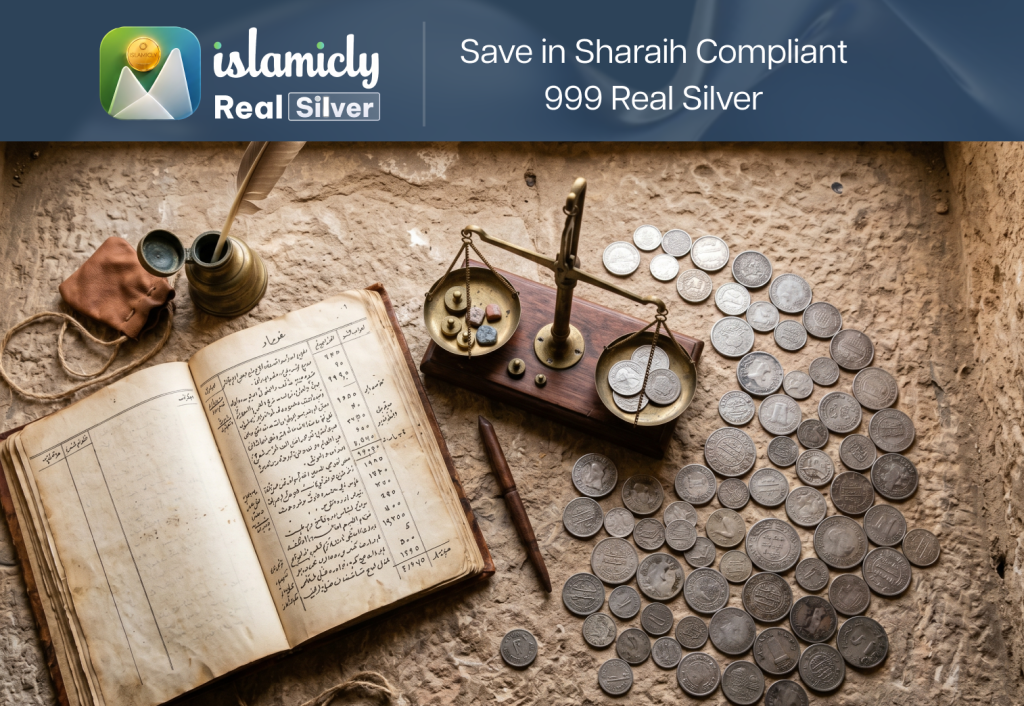
All of it rested on silver. Not the promise of silver. Not a certificate representing silver held by an institution. Actual silver, weighed and assayed, present and real, changing hands in markets that stretched across half the known world.
The scholar and geographer al-Muqaddasi, writing in 985 CE, described the Panjhir valley as producing silver “like rain.” He was describing not merely a mine but an economic engine the source of the monetary fuel that powered the most sophisticated commercial network the medieval world had seen.
Silver as the Language Between Civilisations
The most remarkable thing about Islamic silver was not its quantity. It was what it enabled.
Muslim merchants traded with people who shared neither their language, nor their religion, nor their political system. A merchant from Baghdad arriving at a port in Gujarat met merchants from China, from Hindu kingdoms of the Deccan, from Buddhist traders from Southeast Asia. They could not always communicate in words. But they could all weigh silver. They all understood what a gram of silver was. They all trusted the metal itself because the metal required no intermediary.
This is the function silver performed at the meeting points of civilisations: it was a universal translation layer. Where words failed, silver spoke.
The archaeological record confirms this in ways that continue to astonish historians. Islamic silver dirhams have been found in hoards across Sweden, Norway, Finland, and Russia. Norse traders the Vikings who called silver silfr (the origin of our English word) carried Islamic coins back to Scandinavia along the Volga River trade routes. A Muslim mint-master in 9th-century Baghdad and a Norse chieftain in Sweden would have found it impossible to hold a conversation. But they could agree on the weight of a dirham.
This was the Islamic world’s greatest gift to medieval global commerce: a monetary standard that transcended borders because it was made of something real.

The Mudaraba Model — Silver With Ethics
The Islamic trade networks built on silver were not just financially sophisticated. They were ethically structured in ways that modern financial systems still struggle to match.
The mudaraba partnership in which one partner provides capital (often in silver) and another provides labour and expertise, with profits shared according to a pre-agreed ratio and losses borne by the capital provider was the dominant vehicle for long-distance Islamic trade for centuries.
This structure matters because of what it excludes. There is no guaranteed return. The investor cannot simply deposit silver and collect a fixed interest payment while someone else takes all the risk. If the trade fails, the investor loses their capital. If it succeeds, both parties benefit. Risk and reward are shared aligned, not separated.
This is the essential difference between Islamic finance and conventional lending. The silver-backed mudaraba forced investors to care whether their partners succeeded, because their own return depended on it. This alignment of incentives produced a commercial culture of unusual trustworthiness merchants whose word, backed by silver and witnessed by the norms of Islamic commerce, was worth more than a contract in many parts of the world.
The silver was not just money. It was the material foundation of a moral economy.
What the Panjhir Mines Financed
To understand the scale of what silver made possible, consider what the Abbasid economy at its height actually consisted of.
Baghdad in the 10th century was the largest city on earth, with a population estimated at over a million people. It was home to hospitals bimaristans that were more sophisticated than anything in contemporary Europe. It supported a class of professional scholars whose translations and original works preserved and advanced human knowledge across fields from algebra to astronomy. It maintained trade routes that connected the Atlantic coast to the Pacific, linking economies that Europeans would not directly access for another five centuries.
All of this required money that people actually trusted. Money that could not be debased by a desperate Caliph, inflated away by a ministry of finance, or defaulted on by an institution. Silver provided this. The discipline imposed by commodity money you cannot create more of it simply by deciding to was not a limitation. It was the source of trust that made everything else possible.
When the silver supply from Panjhir eventually declined in the 11th century, the effects on the Abbasid economy were significant and lasting. The monetary foundation weakened. The trade networks became more fragile. The era of peak commercial sophistication began its long, slow decline.
The lesson is not lost on historians. And it should not be lost on us.
The Principle That Survives
The silver dirham as a functioning currency is gone. It is not coming back in its original form. The world is too large, too complex, and too integrated for commodity money to serve as a universal medium of exchange the way it once did.
But the principle survives. And the principle is this: real wealth is anchored to real things. When you save in something with intrinsic value something that exists independently of any institution’s promise or any government’s discipline — you are participating in the most ancient and most proven form of financial security that human civilisation has devised.
The Muslim merchants who carried dirhams across the medieval world understood this instinctively. The scholars who structured their partnerships around silver understood it. The Panjhir miners who extracted it from Central Asian mountains understood it.
You can understand it too. And act on it.
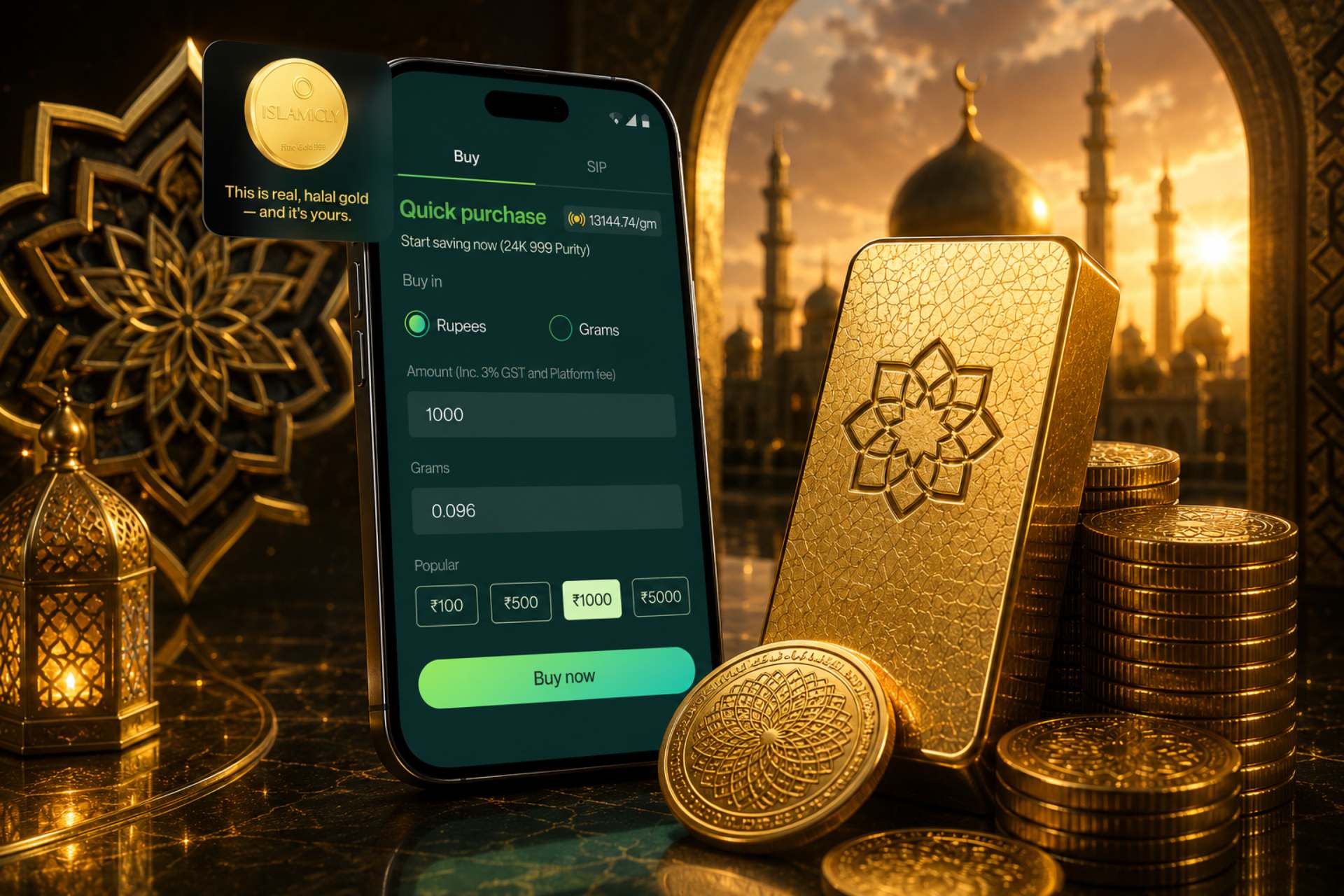
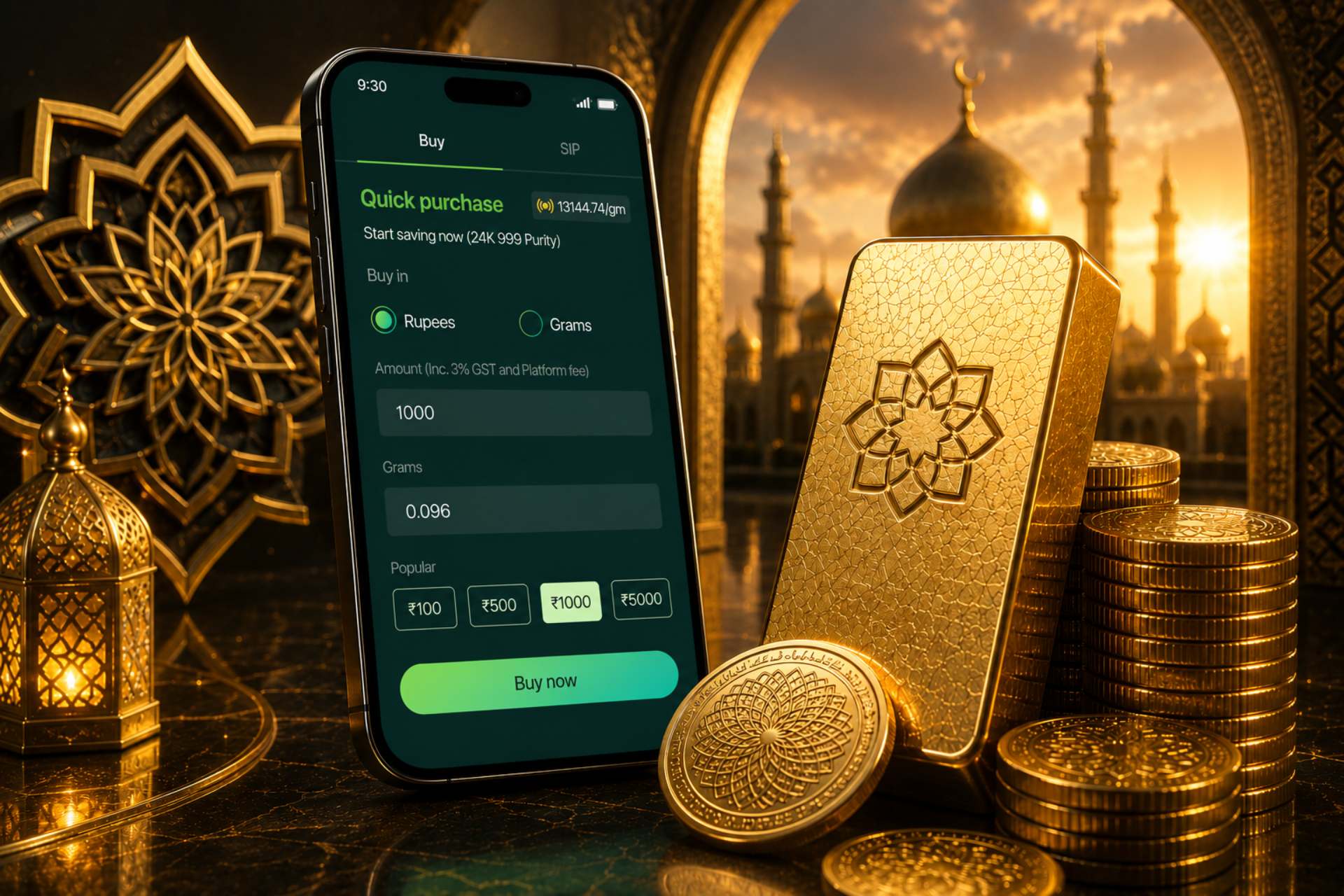
The Islamic Golden Age ran on silver. Your savings can too. Start a silver goal on Islamicly Gold App — 999 fine silver, Shariah-certified, from ₹10.
No comments yet — be the first to share your thoughts.