



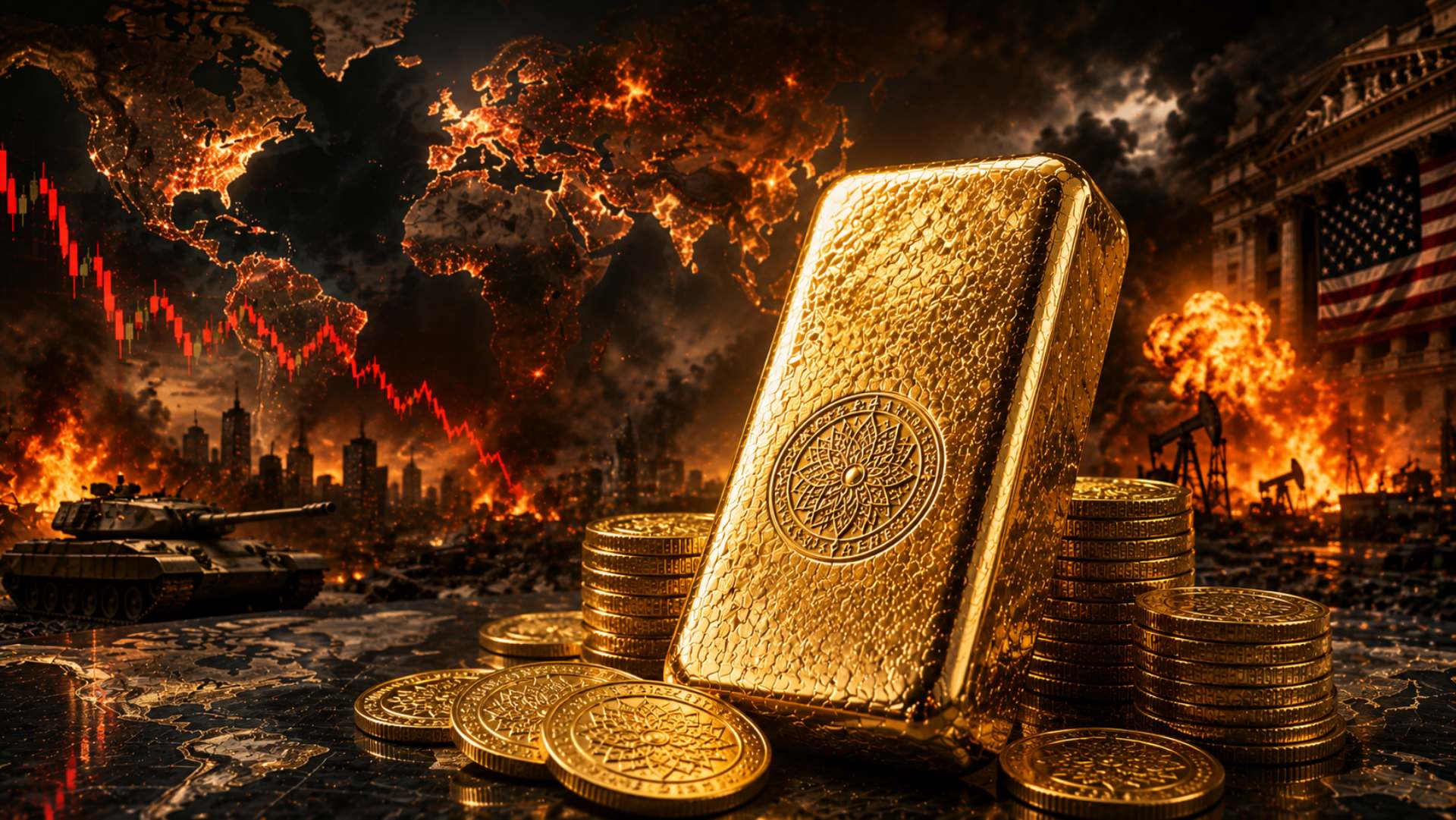

From Trump’s tariffs to Middle East tensions — why 2025 taught every investor the same lesson the hard way
In April 2025, something happened that had not happened in over a decade. Gold crossed $3,000 per ounce for the first time in history. The headlines treated it as a milestone. Veteran investors treated it as a confirmation of something they had known for years. And the millions of ordinary savers who had their money in equity mutual funds, fixed deposits, and currency-denominated instruments sat quietly with their quarterly statements and did the maths themselves.
The maths were not flattering.
This was not a random spike. Gold did not cross $3,000 because of a speculative frenzy or a momentary panic. It crossed $3,000 because of a confluence of forces that had been building for years — geopolitical fractures, monetary exhaustion, supply chain rewiring, and a global loss of confidence in the institutions that have managed the world economy since 1945. Understanding those forces is not just an exercise in financial analysis. It is an act of self-preservation for anyone trying to protect the value of what they have saved.
The tariff shock and what it really means
When the Trump administration announced sweeping tariffs on imports in early 2025 — including a 25 percent tariff on goods from Canada and Mexico, and targeted levies against Chinese exports — the immediate response in financial markets was predictable. Equities sold off. Bond yields moved. Currency markets gyrated.

But the more important response was slower and quieter. Businesses that had spent thirty years building supply chains optimised for a world of free trade began the expensive, disruptive process of rebuilding them for a world of managed trade. The cost of that rebuilding — factories relocated, contracts renegotiated, logistics reimagined — is inflationary. It does not show up immediately in consumer price indices. It filters through gradually, invisibly, over years.
This is the kind of inflation that central banks struggle to combat with interest rate policy because it is not driven by demand — it is driven by the structural rewiring of the global economy. And this is precisely the kind of inflation that gold has historically been best at hedging. When the price of everything rises because the cost of making everything has risen, gold rises with it — not because of sentiment, but because it is the one asset whose supply cannot be increased to compensate.
The Middle East and the oil premium nobody is pricing in
The ongoing tensions in the Middle East — the continued reverberations of the Gaza conflict, the Houthi disruptions to Red Sea shipping, the recalibration of Gulf state relationships with both the United States and China — carry an energy risk premium that financial markets are, characteristically, underpricing.
Approximately 12 percent of global trade passes through the Red Sea. When Houthi attacks forced the rerouting of commercial shipping around the Cape of Good Hope in late 2023 and through 2024, the effective cost of global shipping rose by an estimated 200 to 300 percent on affected routes. Insurance premiums for vessels in the region rose to levels not seen since the tanker wars of the 1980s.
The world did not fully price this in because markets are optimistic by nature and because the disruption, while significant, did not trigger the kind of acute crisis that commands sustained attention. But the underlying fragility remains. A single significant escalation — a naval incident, a missile strike on a major energy facility — could send oil to $120 or $140 per barrel in a matter of days. In that scenario, gold, which has historically moved in strong correlation with oil price spikes, would not merely hold its value. It would accelerate.
The dollar’s slow surrender

Perhaps the most consequential long-term story in global finance — and the one most systematically underreported in Western financial media — is the gradual erosion of the US dollar’s reserve currency dominance.
The numbers are not dramatic on a year-by-year basis. The dollar’s share of global foreign exchange reserves has declined from approximately 73 percent in 2001 to around 58 percent today. That sounds like a modest shift. But consider what it means in absolute terms: trillions of dollars of global reserves are being diversified away from dollar-denominated assets and into other instruments. A significant proportion of that diversification is going into gold.
Central bank gold purchases hit a record high in 2022. They remained at historic highs in 2023 and 2024. The buyers are not primarily Western central banks — they are the central banks of China, India, Poland, Turkey, and a long list of emerging market economies that watched the United States freeze Russia’s dollar reserves in 2022 and drew the obvious conclusion: if your reserves can be frozen by a geopolitical adversary, they are not really yours.
This is the deepest and most structural driver of gold’s current strength. It is not speculative. It is not emotional. It is the rational response of sovereign wealth managers around the world to the realization that in a world of weaponised finance, only gold is truly nobody else’s liability.
What this means for you
If you are an ordinary saver in India — and India sits in a uniquely advantageous position in this story, as a country with both a cultural affinity for gold and an economy increasingly positioned as a beneficiary of supply chain diversification away from China — the case for gold is not complicated.
You do not need to predict which geopolitical crisis will materialise next, which central bank will next weaponise its currency, or when the tariff wars will escalate into something worse. You only need to recognise that we are living in a period of elevated uncertainty across multiple dimensions simultaneously — geopolitical, monetary, supply chain, and energy — and that gold is the asset class specifically designed to preserve value in exactly this kind of environment.
The world is not ending. But it is changing, faster and less predictably than at any point since the end of the Cold War. In times of change, the oldest store of value in human history has a habit of reminding us why it survived every previous era of change intact.

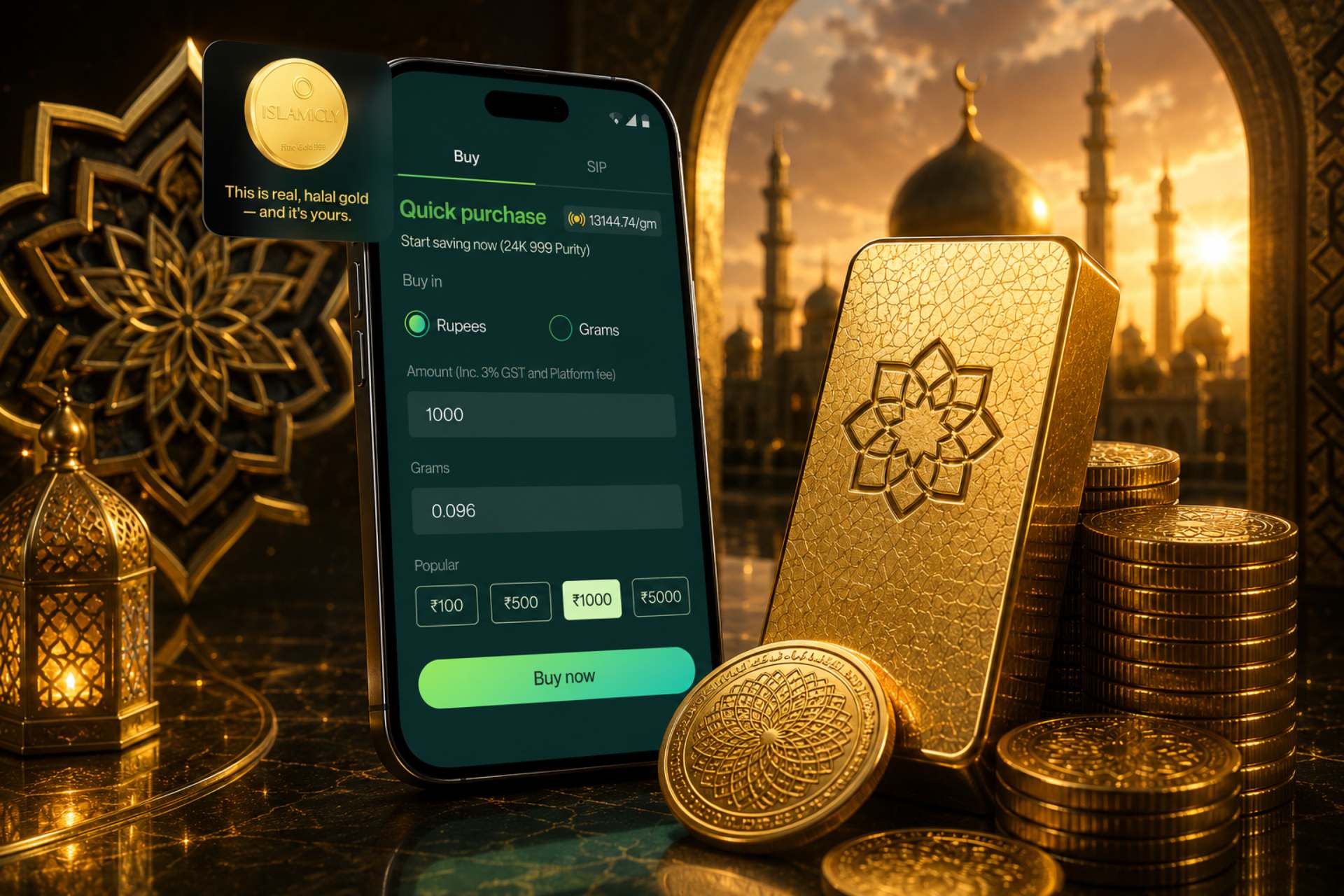
Gold by Islamicly App lets you save in 24K gold automatically, from 100 a day. No speculation. No complexity. Just real gold, in your name, working for you.


No comments yet — be the first to share your thoughts.