



From the souks of Madinah to the vaults of Mumbai — why the oldest money in the world is having its most important moment
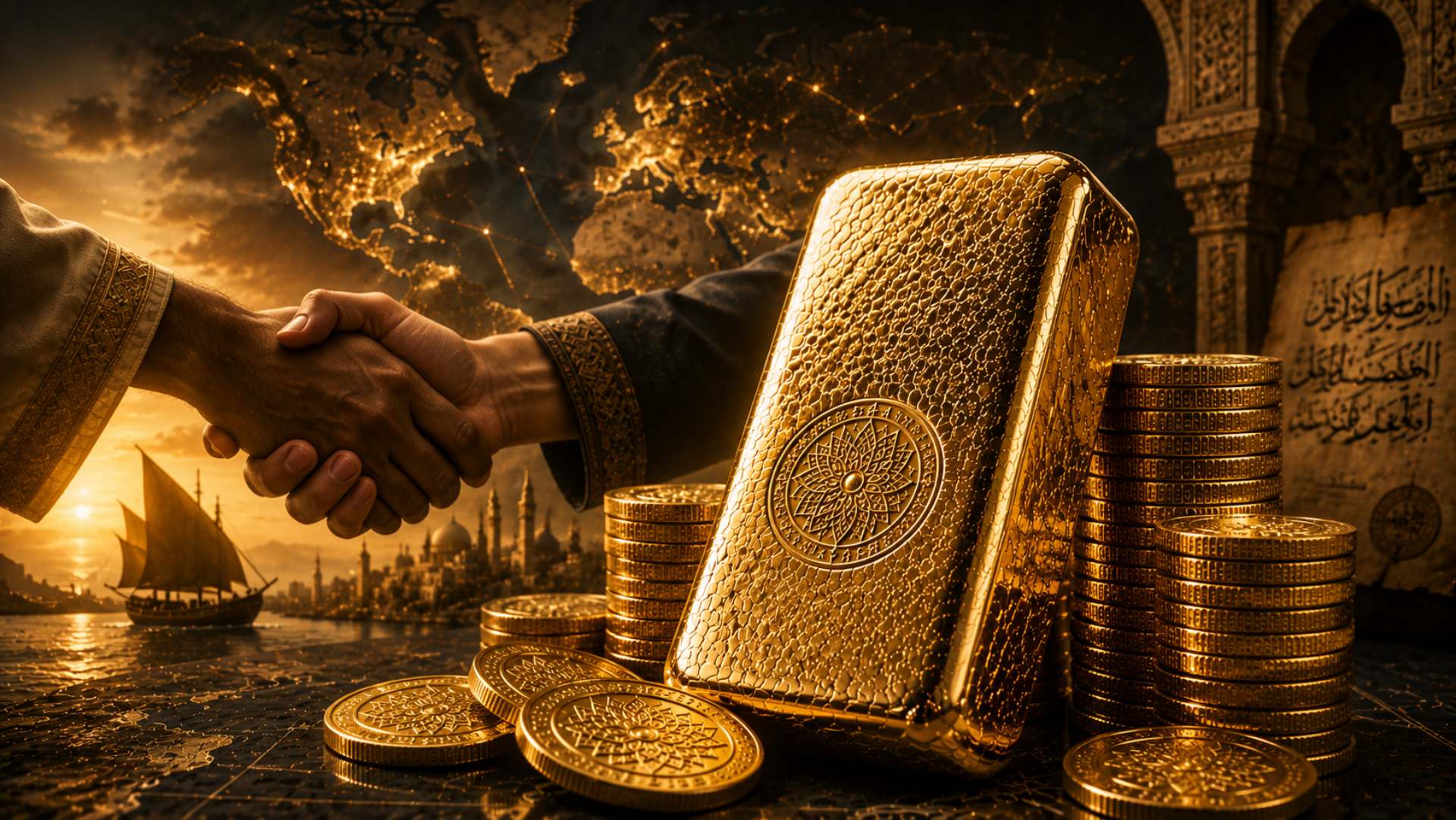
There is a shop in the old quarter of Istanbul’s Grand Bazaar that has been selling gold in the same location for over four hundred years. Four centuries. The Ottoman Empire rose and fell. Two World Wars reshaped the planet. The dollar was invented, decoupled from gold, nearly collapsed, and reinvented itself multiple times. Cryptocurrencies arrived, made millionaires, erased fortunes, and confused regulators. Through all of it, the shop remains. The gold remains.
This is not a coincidence. It is a statement about the nature of money itself.
We live in an era of extraordinary financial complexity. There are thousands of financial instruments, dozens of asset classes, and an entire industry devoted to convincing ordinary people that wealth is a complicated business best left to professionals. And yet, when the professionals panic — when banks fail, currencies devalue, and markets crash — they almost always end up in the same place. Gold.
The metal that refused to be abstract

Every other form of money in human history has, at some point, required an act of faith. Paper currency requires you to trust the government that printed it. A bank deposit requires you to trust the institution that holds it. A stock certificate requires you to trust a company’s future earnings. Even Bitcoin requires you to trust a network, a protocol, and the collective belief of millions of strangers.
Gold requires none of this. It simply is. It does not corrode. It cannot be printed. It cannot be hacked. It does not depend on the solvency of a counterparty or the stability of a political regime. In a world where almost every other store of value is ultimately a promise made by someone else, gold is the only one that is purely itself.
The ancient Egyptians understood this. So did the Romans, who called it aurum and used it to pay their legions across three continents. So did the traders of the medieval Islamic world, who carried gold dinars from Andalusia to the Silk Road — coins whose weight and purity were so reliably consistent that merchants from different civilisations trusted them without a common language.
What the Prophet ﷺ understood about gold
In Islamic tradition, gold holds a place that goes beyond economics. The Quran mentions gold as one of the adornments of this world — a test of gratitude and stewardship. The Prophet Muhammad ﷺ spoke about gold and silver with a precision that modern economists would admire: he prohibited their exchange except hand-to-hand and in equal measure, a ruling that, fourteen centuries later, economists recognise as a remarkably sophisticated prohibition on fractional reserve banking and speculative currency trading.
The scholars of Islamic jurisprudence classified gold and silver as thaman — real money — as distinct from fulus, which is representative or token money. This distinction, made in the 9th century, anticipates by a thousand years the modern debate between commodity money and fiat currency. The Islamic tradition understood intuitively what the financial crises of 2008 and 2023 taught the rest of the world the hard way: that money which is not anchored to something real is ultimately fragile.
The Indian relationship with gold
No country on earth has a more intimate relationship with gold than India. Indians hold an estimated 25,000 tonnes of gold amounting to trillions of dollars — more than the official reserves of the United States, Germany, and the IMF combined. This is not the hoarding of a fearful population. It is the accumulated wisdom of generations who lived through famines, wars, partition, and currency crises, and who learned that gold was the one thing that survived all of it.
In Indian Muslim households, this relationship carries additional spiritual weight. Gold jewellery given at a wedding is not merely ornamental — it is the woman’s personal financial security, independent of her husband, guaranteed by Shariah. The mahr — the mandatory gift from a husband to his wife at marriage — has traditionally been given in gold precisely because of its permanence and reliability.
Why now is different
For most of human history, owning gold meant storing gold — and storing gold meant risk. Theft. Loss. The transaction costs of buying, assaying, insuring, and liquidating physical metal were high enough that gold was, in practice, accessible only to the wealthy.
Digital gold changes this equation entirely. For the first time in history, a young professional in Hyderabad, a mother saving for her daughter’s wedding in Lucknow, or a student setting aside fifty rupees a week in Bengaluru can own real, allocated, insured 24-karat gold — not a promise of gold, not a gold-linked derivative, but actual physical gold stored in their name in a vault — for the price of a cup of chai.
The oldest money in the world has become the most accessible it has ever been. The shop in Istanbul’s Grand Bazaar would approve.

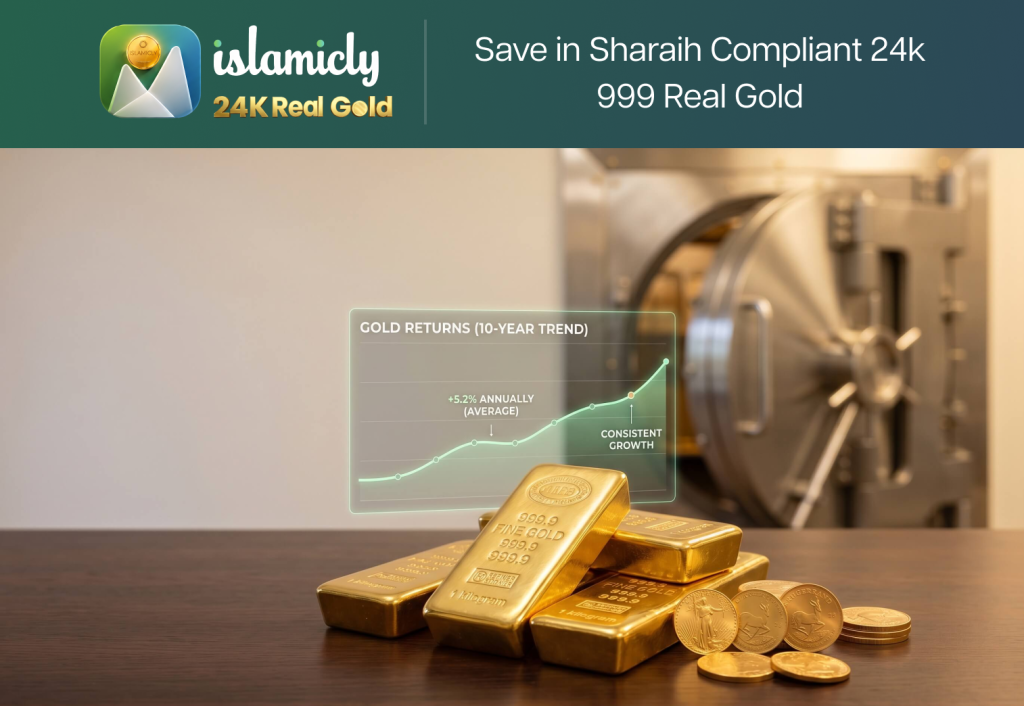
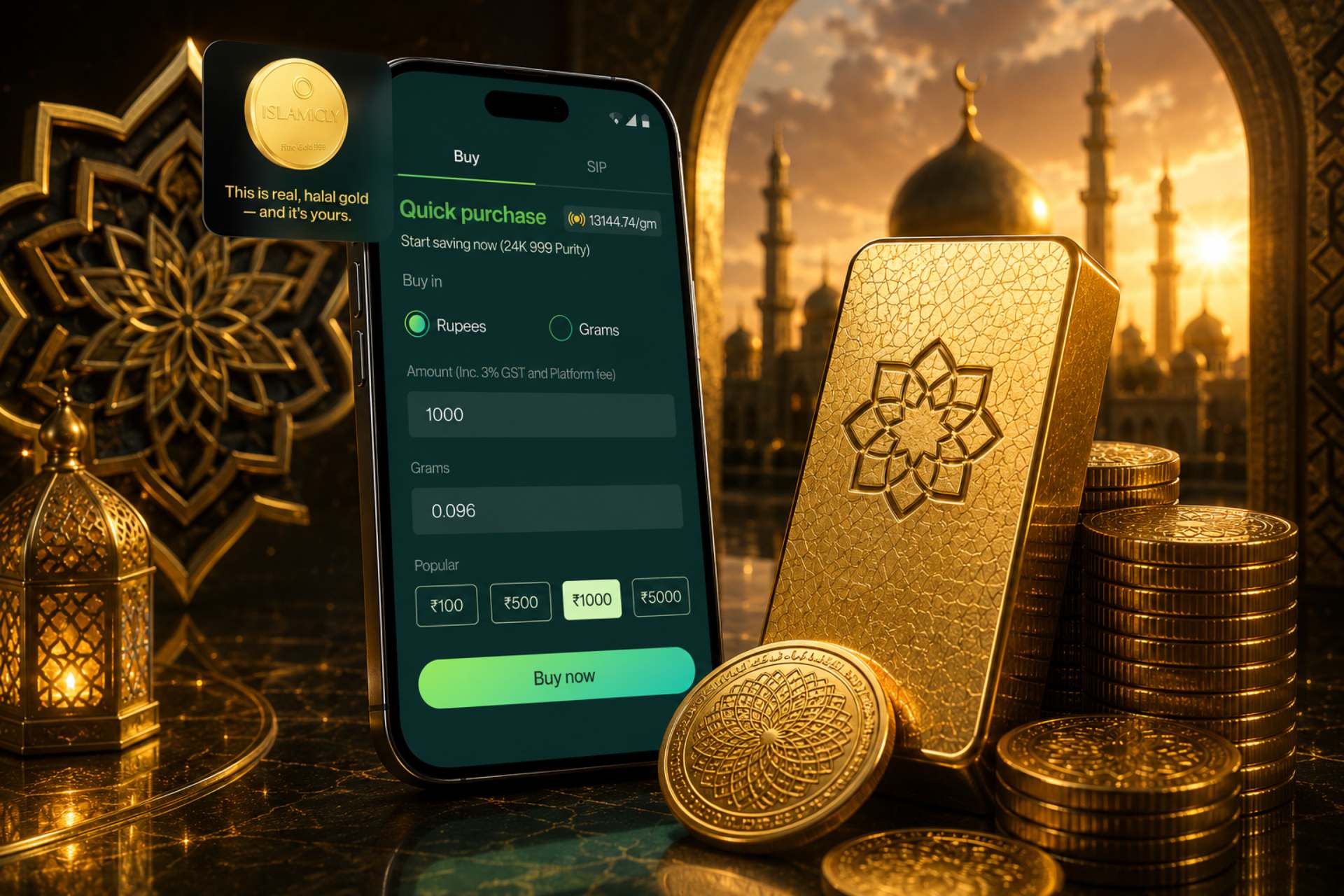
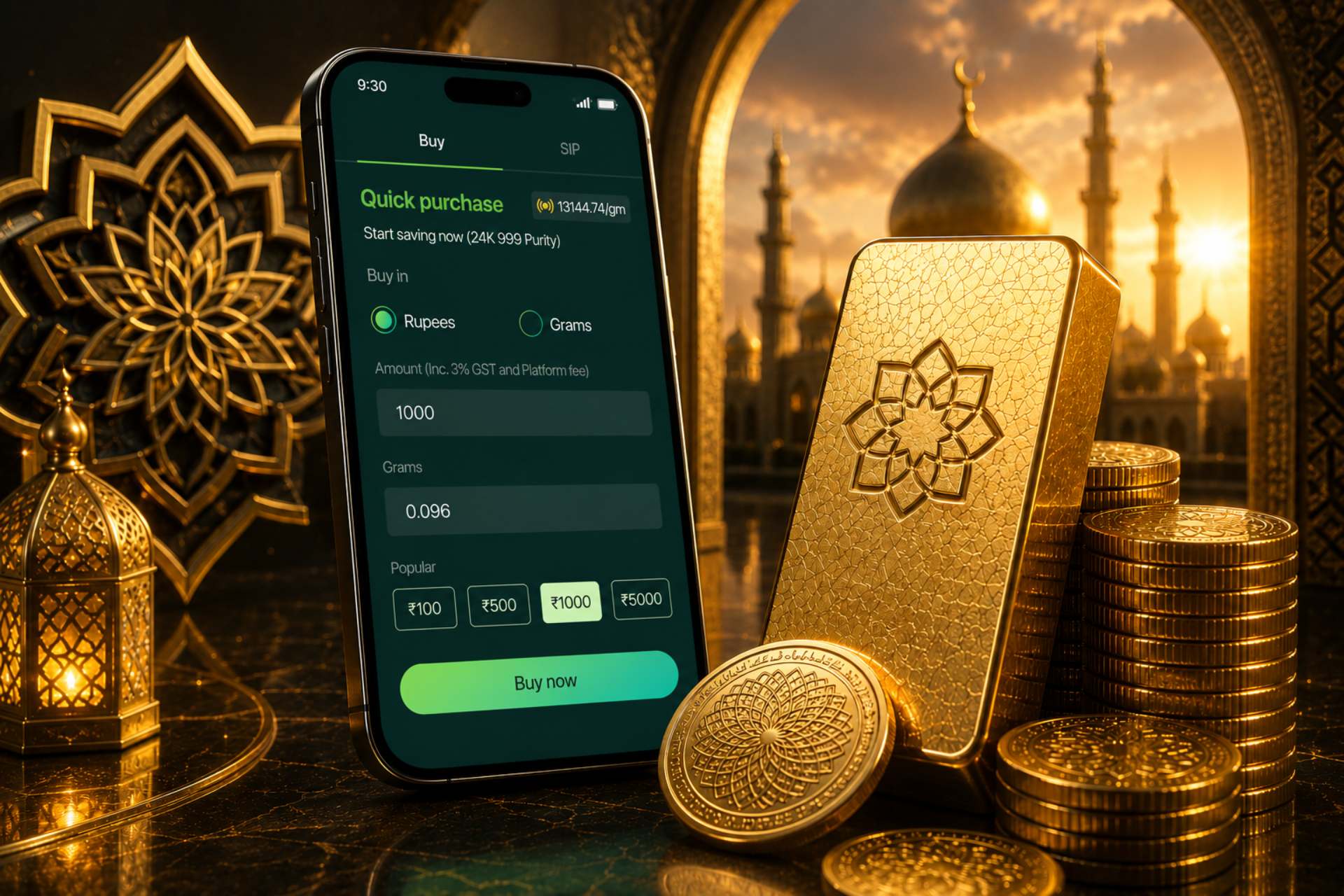
Gold by Islamicly App offers 999 fine gold savings, Shariah-certified by an independent Shariah board, starting from ₹10.

No comments yet — be the first to share your thoughts.